
It is almost prophetic and definitely poetic that I resumed my travel journaling at the very place and time it paused; Mbarara in 1520 AD.
Before we get there, I must say, weekend trips to the countryside remain my choice relief from the demanding city life. I grab at every opportunity with the novel excitement of a first-time traveller to a new destination. This time round, getting to Mbarara was more complicated because part of the Katonga bridge along the main Kampala-Masaka-Mbarara highway had caved in following heavy rains that caused River Katonga to burst its banks. We were left with no choice but to take the less-travelled route via Gomba and Sembabule districts, which added 100km to the journey. Although I consider it the more scenic route with its undisturbed greenery and calming aura, the endlessly winding roads presented limited opportunities to overtake the numerous snail-paced trailers and overloaded trucks that terribly slowed us down.
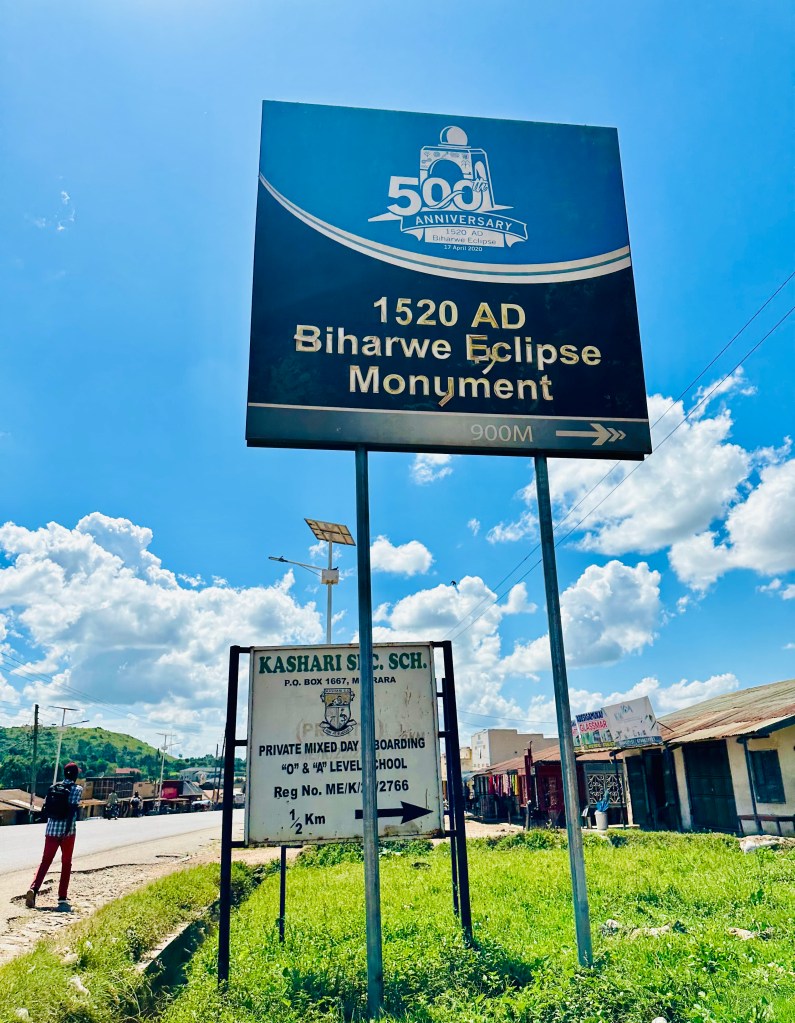
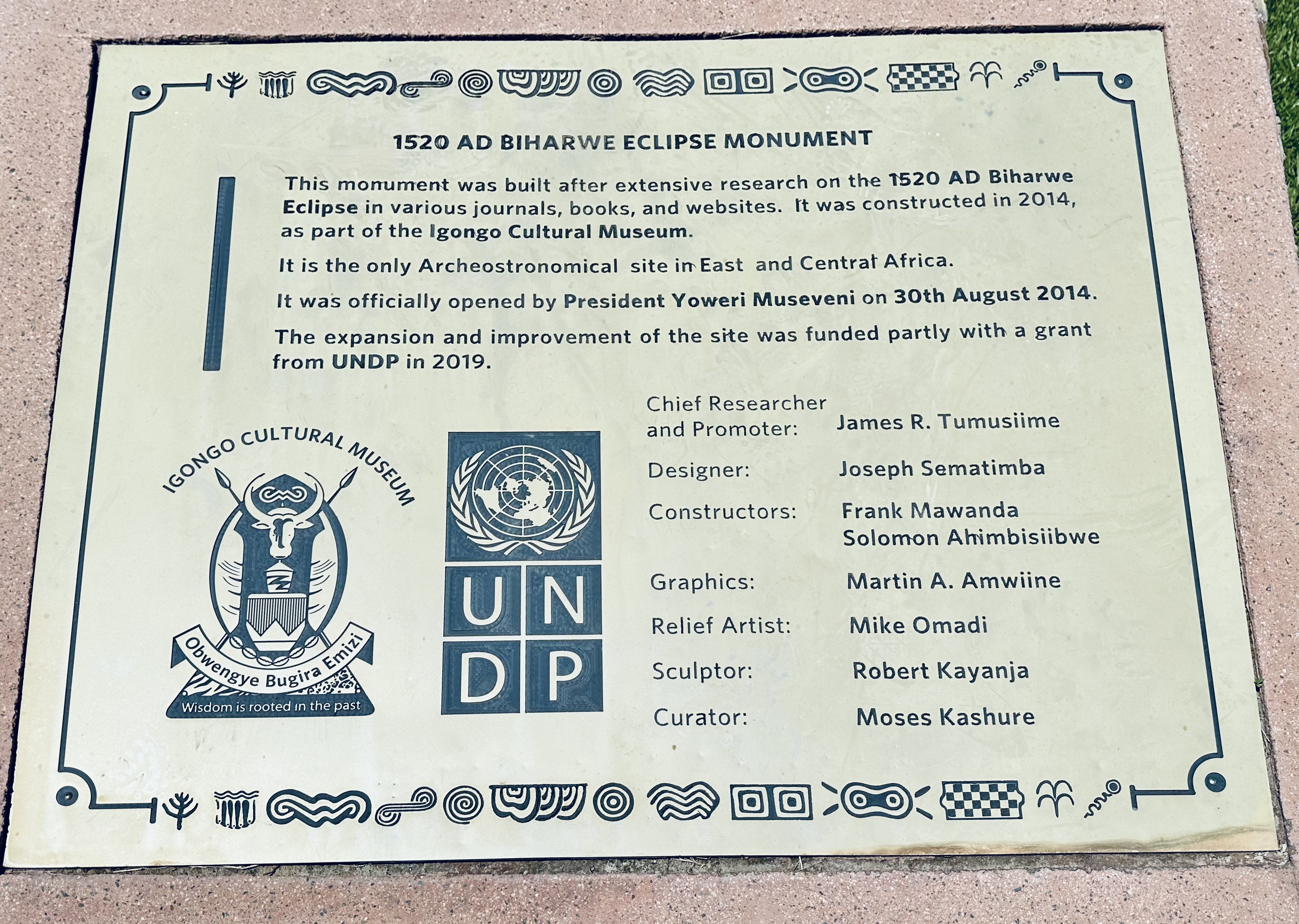
We got to Mbarara in the dead of night, pretty beaten by the journey and blinded by the full beam headlights of equally frustrated drivers trying to make up for the dark, unlit highway. I slept in the next morning, enjoying the much-needed rest, and then leisurely embarked on my visit to the 1520 AD Biharwe Eclipse Monument at the Igongo Cultural Centre Museum. To liven the mood and ease the journey, the universe gifted me unexpected company, which eventually altered the direction of the trip. How so you might wonder…..?
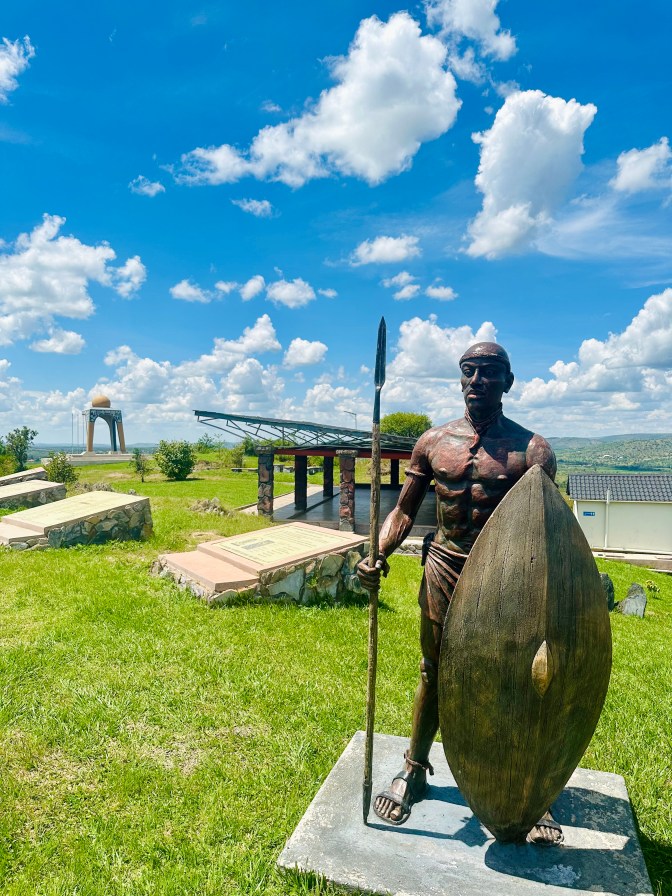
For starters, we abandoned the hiking idea and drove all the way to the hilltop where the monument stands. This was unwise because we discovered that the property is fenced off and the gate securely locked by the Igongo staff. So, please be sure to kick-start this adventure at their offices across the road. Luckily for us, we made a phone call to the museum staff, who were gracious enough to speedily dispatch a guide who granted us access and later offered an insighful tour. Cold drinks kept our parched throats and wandering minds company; if it’s a hot day, be sure to grab some before heading for your hike or drive.
It did not stop there. In contrast to my usually calm and mostly pensive tours, where I immerse myself in history and mentally teleport to that point in time, this one was noisy, chaotic, and filled with laughter. I wonder how the worshippers perceived our spirited enthusiasm! I know you are wondering – worshippers? Yes, because this site also serves as a place of worship for believers in the Bachwezi. Now, let’s dial back to 1520AD and offer the history enthusiasts a captivating treat.
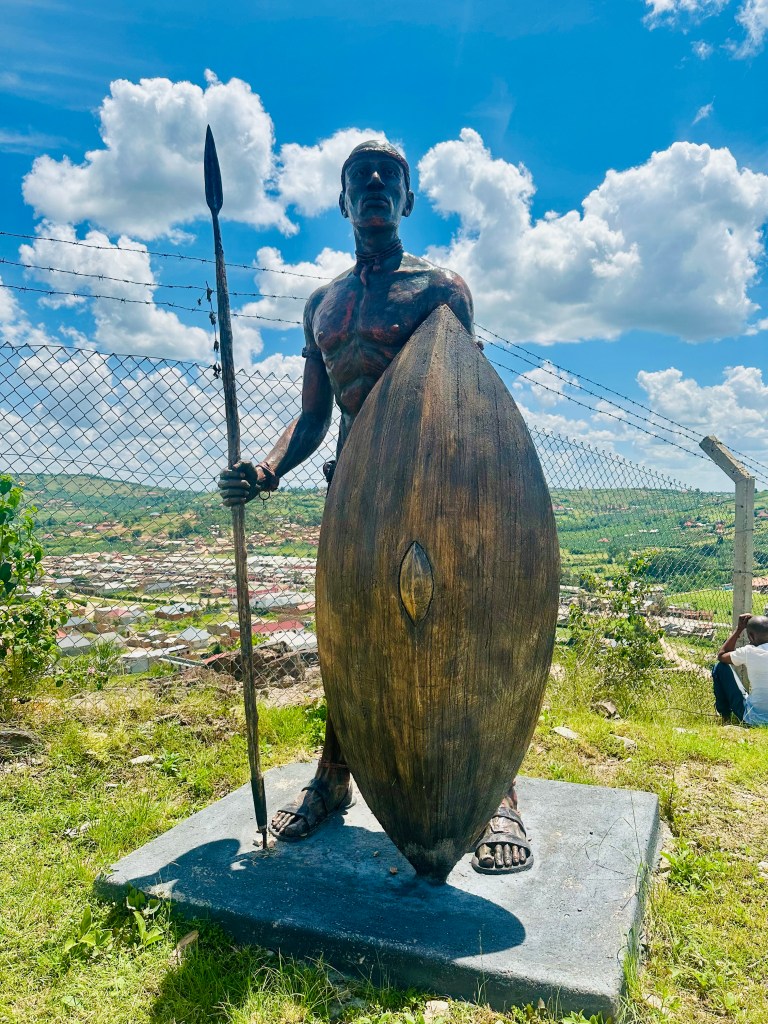
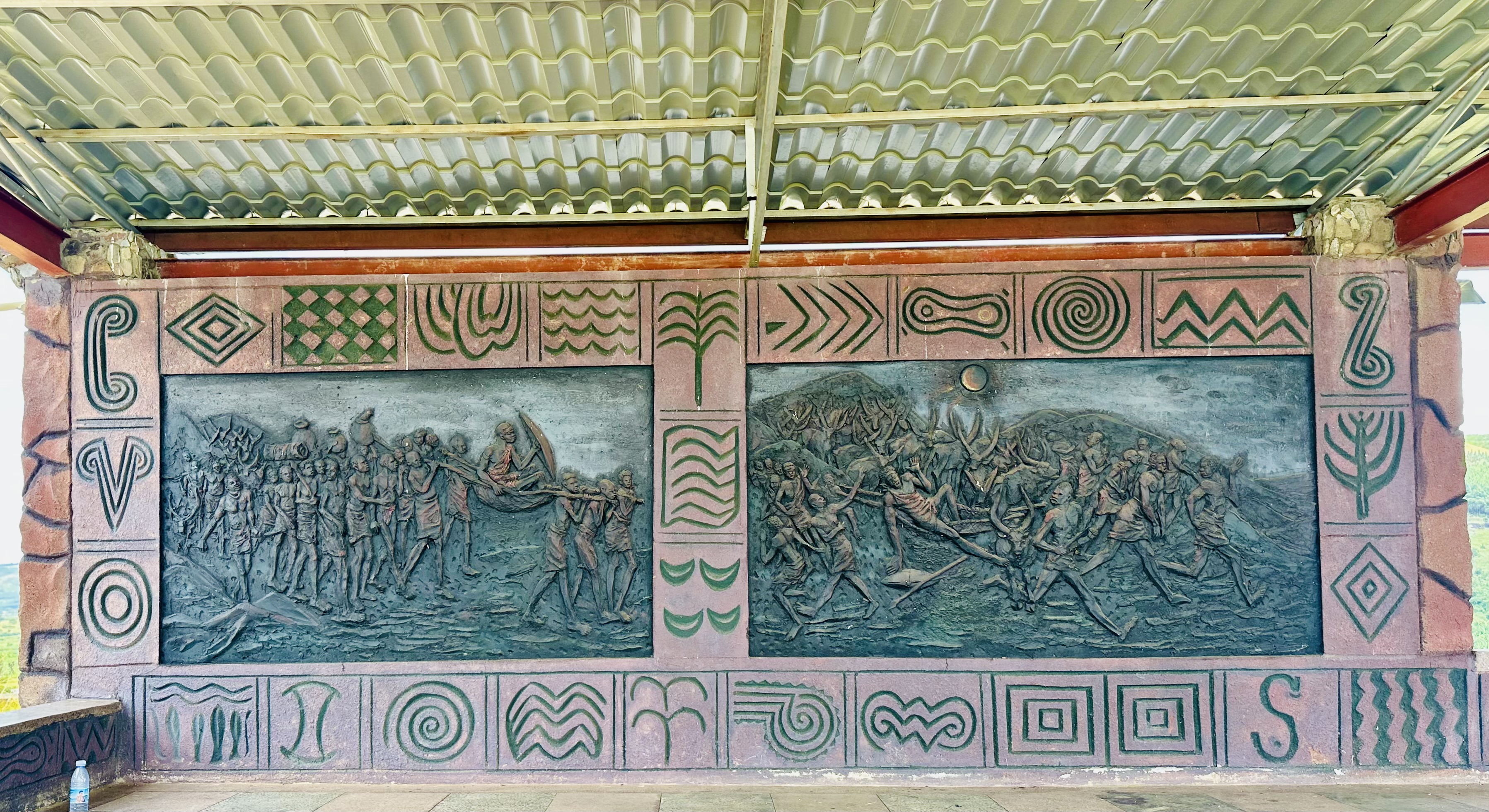
According to the guide and the literature at the site, the 1520 AD Biharwe Eclipse Monument was built to commemorate the total eclipse said to have occured in 1520, and it holds significant meaning in the folktales of Bunyoro, Buganda, and Ankole. For that reason, the monument’s three pillars represent the three kings of the three kingdoms at the time: Kabaka Nakibinge of Buganda, Omukama Olimi 1 Rwitamahanga of Bunyoro, and Omugabe Ntare 1 Nyabugarobwera of Ankole. The story involves wars, cows, and slaves: it is said that when the eclipse occured, the Omukama (King) of Bunyoro, fresh from ravaging neighbours in war and somewhat excited about his loot, mistook it for a supernatural retaliation from his enemies, sending him into a panic. This caused him to abandon his loot, which the Omugabe (King) of Ankole decided were a gift from heaven. To save face and not return home empty-handed, the Omukama raided Buganda kingdom, and sadly, the Kabaka (king) of Buganda was killed. It is a brief yet entertaining story, dotted with gaps that allow your imagination to run wild, and a monument that is defintely worth a visit.
The next time you find yourself in the area, make a quick detour to 1520 and play the Game of Thrones!






Cheers!
Saw Bizzy

 Saw Bizzy